
Landscaper Pro
A reusable WordPress framework built to solve a sales gap, a process problem, and a developer bottleneck — all at once.
Ramblin Jackson was losing deals in the middle. Cheap templates looked generic. Fully custom builds cost way too much. There was no product in between — and every site that did get built took 70+ hours. Nothing was reusable, copy wasn’t structured, and developers were solving the same problems from scratch every time. Landscaper Pro became the templating and design system that fixed all of it.
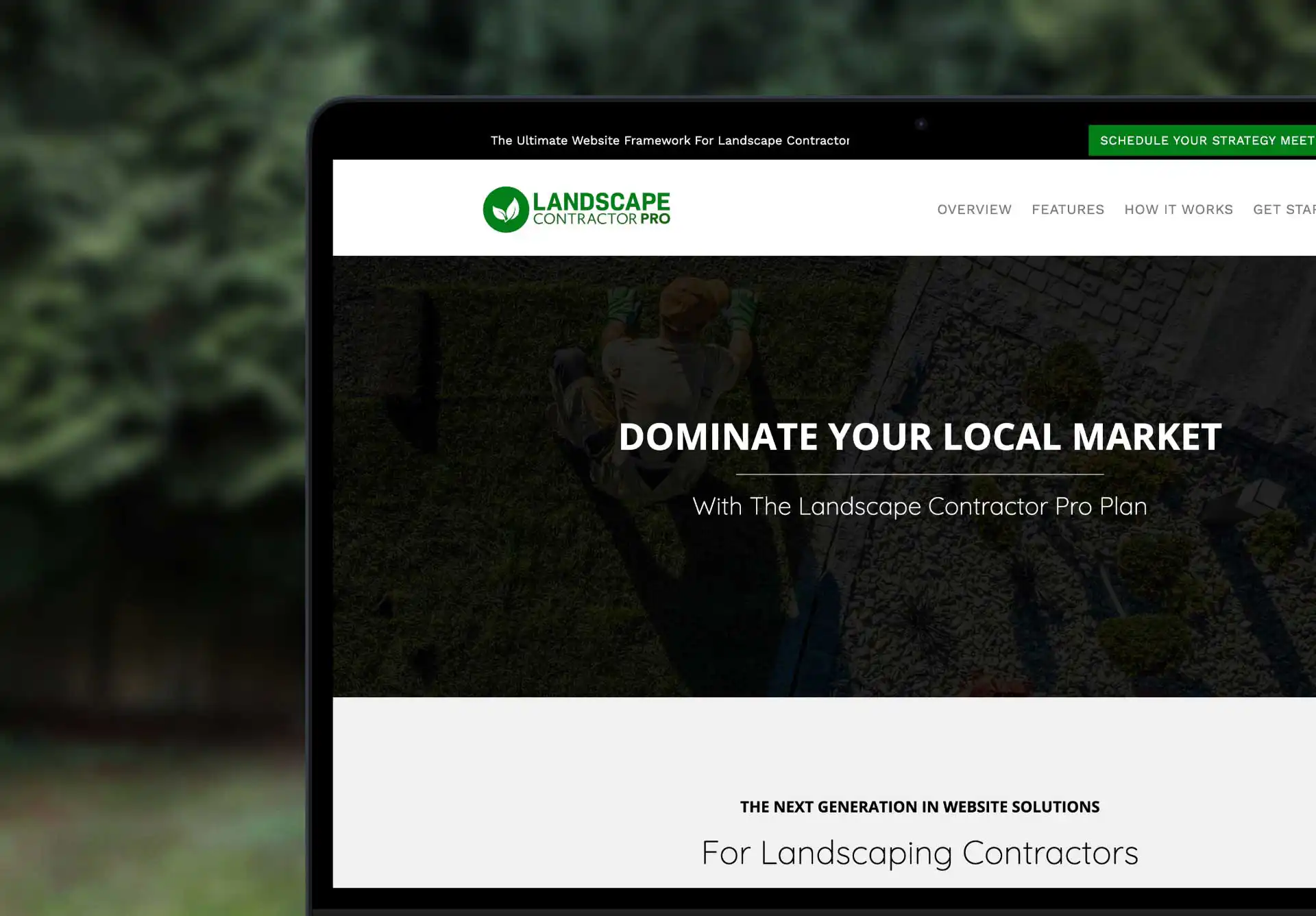
The Problem
Before Landscaper Pro existed, building a website at Ramblin Jackson meant starting from scratch every time. The agency was using off-the-shelf Beaver Builder templates and pre-built Genesis child themes — neither of which was designed for the way the team wrote content or structured local SEO. Every page was a new layout. Copy wasn’t reviewed until it was live on the site. Developers were rebuilding the same solutions repeatedly, and site builds were averaging 70 or more hours each.
The sales team had a separate but related problem. There was no middle ground in the product offering — clients could choose something cheap and generic from the wild, or pay for a fully custom build. Nothing in between. Deals were being lost in that gap.
Nobody had connected the two problems yet!
The Idea
The solution started with the content team. Working closely with the management team, I helped develop a set of web copy wireframes that defined exactly how each page type should be structured — what sections it contained, what copy went where, and how it supported both user experience and local SEO. For the first time, content had a repeatable structure before it touched a developer.
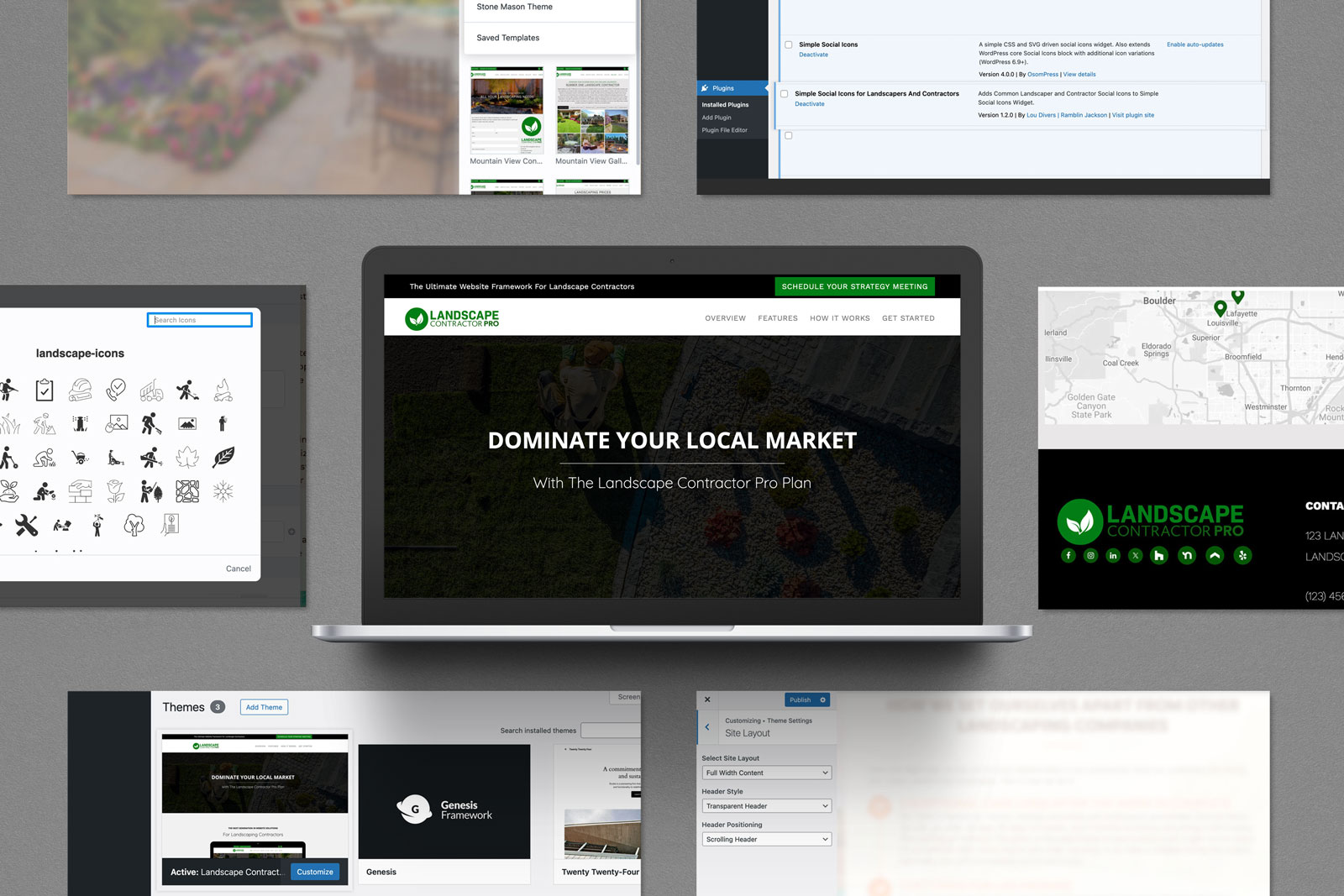
Those wireframes became the architectural foundation of Landscaper Pro — a custom WordPress design system built on the Genesis Framework and Beaver Builder, engineered specifically around the agency’s content process and SEO methodology. It launched with three distinct visual themes: Mountain View, Stone Mason, and Coastal. Each one was a complete, production-ready starting point built from the wireframe.
The Build
The foundation was a child theme for the Genesis Framework with a full set of reusable Beaver Builder templates and modules. Each module included a CSS class whose styles lived in the child theme’s stylesheet. Templates were registered using Beaver Builder’s register templates function, meaning any developer on the team could access a complete, pre-styled page layout directly from the builder.
I was also able to identify gaps in other tools that the team was using and fill them. The popular Simple Social Icons plugin was missing every platform that actually matters to landscaping businesses; Houzz, Nextdoor, Angi, Porch, Yelp, and Google Business Profile. I built a custom plugin that extended Simple Social icons to include all of them. Most icons libraries only covered general iconography, so I added a library of landscaping icons that integrated directly into Beaver Builder as a custom icon set.
The Results
Landscaper Pro became a complete ecosystem built from the wireframes up with an immediate impact that compounded over time.
In its first year of production, Landscaper Pro powered 9 of the 16 sites the agency launched — 56% adoption in year one. By 2024 that number had climbed to 26 out of 31 sites. By 2025 it was holding at 88% of all new builds.
Build time dropped from 70+ hours per site to approximately 35 hours. For an agency with aspirations of launching 20-30 sites per year that is a significant operational gain.
Landscaper Pro became the foundation for roughly 65% of new website sales from 2023 through 2025 — the middle ground the sales team had been lacking, built by a developer who understood both the technical constraints and the business problems behind them.
Build time reduction
50%
70 hrs down to 35 hrs per site
Peak adoption
88%
Of all new sites by 2025
New sales powered
65%
Of agency website sales 2023–2025
A Little More About Me
I’ve been doing this long enough to know what I am good at, I’m honest enough to know what I don’t know, and I’m still curious enough to enjoy the difference.
I started in web development before WordPress was a serious platform, working in HTML, FLASH, ASP.NET and e-commerce at a time when building for the web meant figuring most of it out yourself. That foundation of curiosity and hard work stuck. Twenty years later I still approach problems the same way: understand the system before touching it, and build things that hold up over time.
Along the way I have worked on everything from custom WordPress builds and WooCommerce stores to membership platforms, internal tools, and full SaaS products built from scratch. The problems change. The approach does not.
I work best in environments where quality is valued, documentation is treated as part of the job, and developers are brought into decisions before commitments are made. I am thorough, direct, and most productive when I can go deep on a hard problem and get it right.