
Math Window
E-commerce redesign for a brilliantly engineered specialty math learning tool
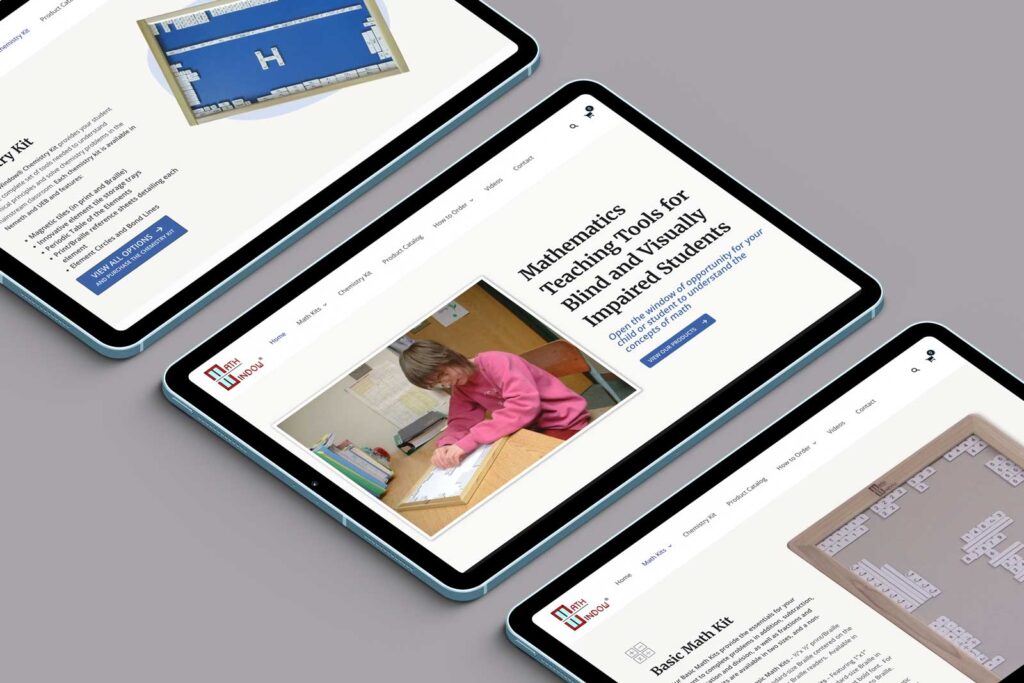
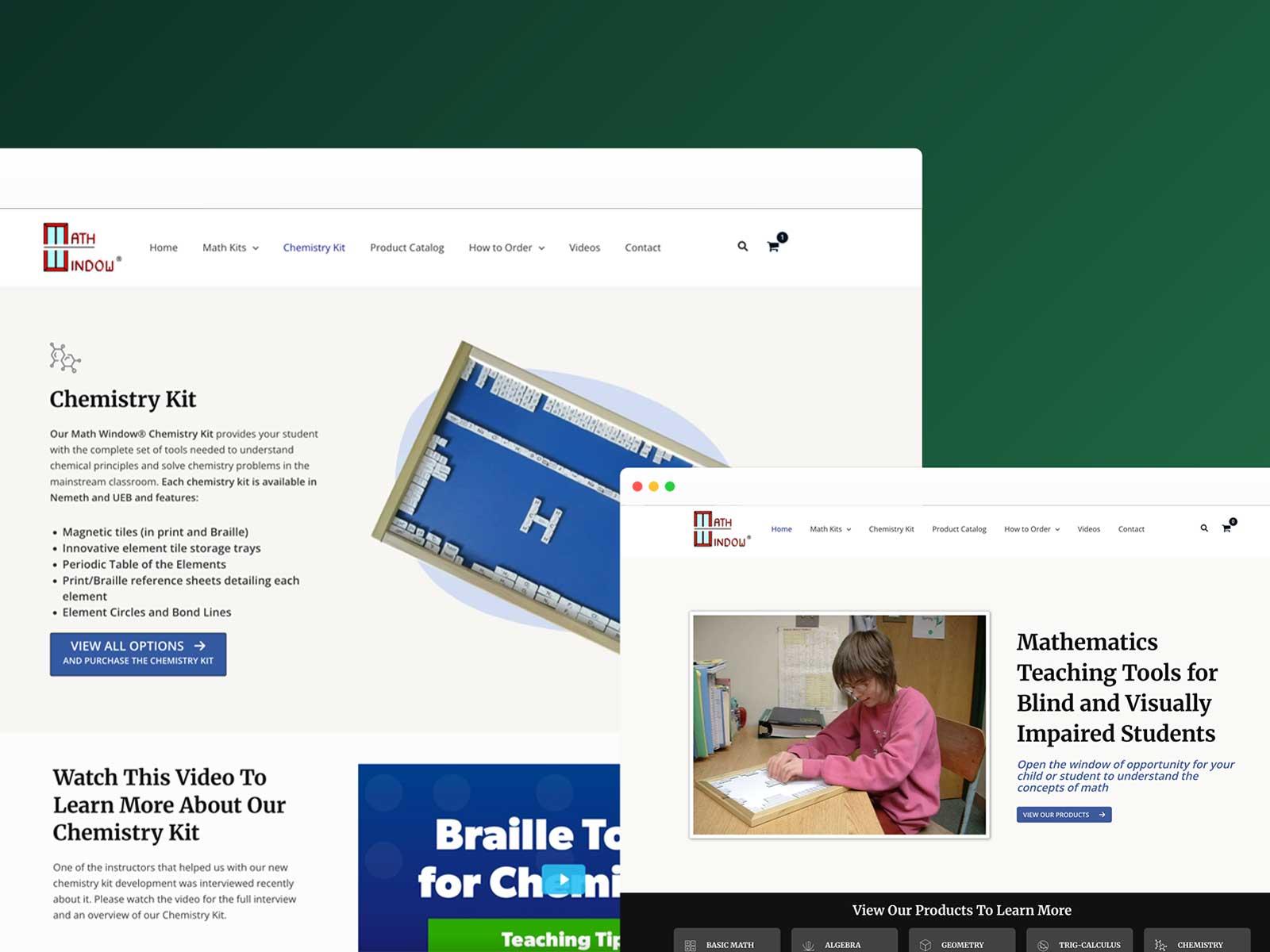
The core of the work for this project was building dedicated landing pages for each of their math kits — Basic Math, Algebra, Geometry, Trig-Calculus, and Chemistry. Rather than sending visitors straight into a product listing or shop page, each page gives the full picture: what the kit is, who it’s for, what’s included, and how to purchase.
The Problem
Math Window makes tactile math kits for blind and visually impaired students — tools that help kids learn Basic Math, Algebra, Geometry, Trig-Calculus, and Chemistry through touch rather than sight. The product is genuinely exceptional. The store was not.
The site was a standard WooCommerce setup. Plug it in, configure it, take orders. Nobody had thought carefully about who was actually buying, how they were searching, or what they needed to know before they could commit to a purchase. The result was a store that was essentially invisible in search and poorly equipped to convert the visitors who did find it.
The customer for Math Window is not a casual browser. They are a special education teacher, a school district purchasing coordinator, or a parent homeschooling a visually impaired child. Before they spend money on a specialized learning tool they need to know which braille standard the kit supports — UEB or Nemeth — what curriculum level it covers, what is physically included, and whether it is the right fit for their student. A product listing page with a title, a price, and an add to cart button cannot answer those questions. It just creates uncertainty, and uncertain customers do not buy.
The Idea
The solution was to stop treating Math Window like a general e-commerce store and start treating it like what it actually was — a specialized educational product for a specific, informed customer with specific questions that needed specific answers.
Each kit needed its own dedicated landing page. Not a product listing. A complete resource that explained what the kit was, who it was for, which braille standard it used, what was physically included, and how to purchase. Pages built for the customer’s decision process, not the store’s category structure.
At the same time, the entire site needed to be rebuilt with accessibility at the center. A product for visually impaired students, sold to teachers and parents who work in that community, had an obligation to meet WCAG standards. Proper contrast ratios, semantic markup, screen reader-friendly structure — not as an afterthought but as a design requirement from the first decision.
The Build
Five dedicated landing pages — one for each kit — each written and structured to answer every question a buyer would have before committing to a purchase. The URL structure, page hierarchy, and navigation were rebuilt from scratch with both the customer and search engines in mind. Every page was written to rank for the specific terms teachers and parents were actually using to find these products.
On the homepage, product demonstration videos and real student testimonials gave first-time visitors the context they needed to understand how a tactile math tool actually works before committing to a purchase. Custom icons and video thumbnails for each kit gave the site a cohesive, intentional feel that matched the quality and intention of the product itself.
The Results
The chart shows two years of directional growth across organic traffic, search rankings, and revenue following the rebuild. The trend lines moved together and kept moving — a sign that the structural and SEO work compounded over time rather than spiking at launch and flattening.
Revenue grew 158% over two years. The site went from essentially invisible in search to ranking consistently for the terms its customers were actually using.
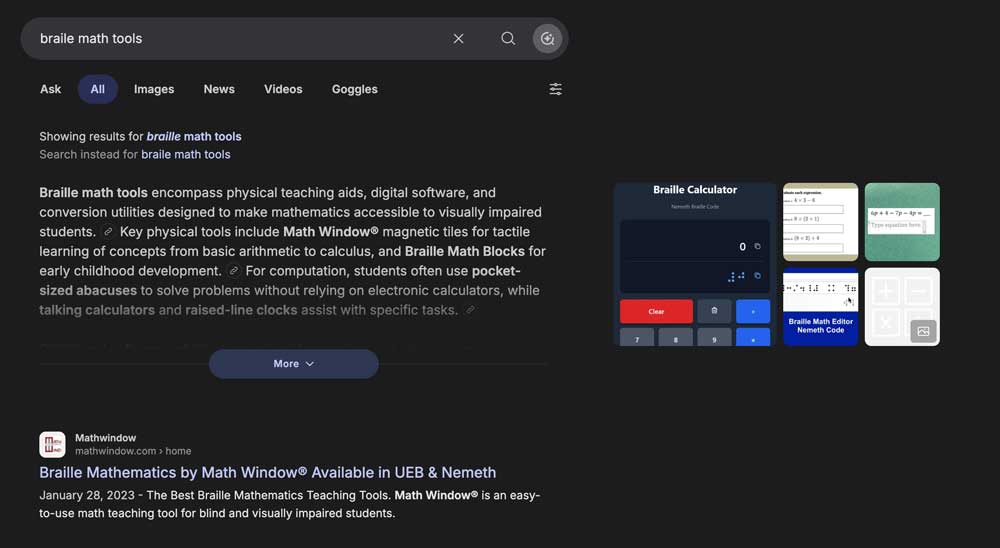
Today Math Window holds the page one position one result for core search terms, and the site’s content is referenced and linked directly in AI-generated search overviews — a signal that the semantic structure, content depth, and authority built into the page architecture is being read and understood correctly by both traditional search engines and AI search tools.
Exact values withheld at client request.
Traffic
Conversions
Trend lines are illustrative of directional growth. Exact values withheld at client request.
Organic search
Page one. Position one.
Content architecture
Five dedicated landing pages built around how customers actually search — kit names, braille standards, curriculum levels. Each page answers the specific questions search engines and buyers both need answered.
Semantic markup + clean URL structure
Proper heading hierarchy, schema markup, and tidy URLs gave search engines a clear map of the site’s content and authority.
Core Web Vitals
Fast load times, layout stability, and a performant front end contributed to the overall authority signal. Clean code compounds over time.
AI search overview
Named in AI search overviews.
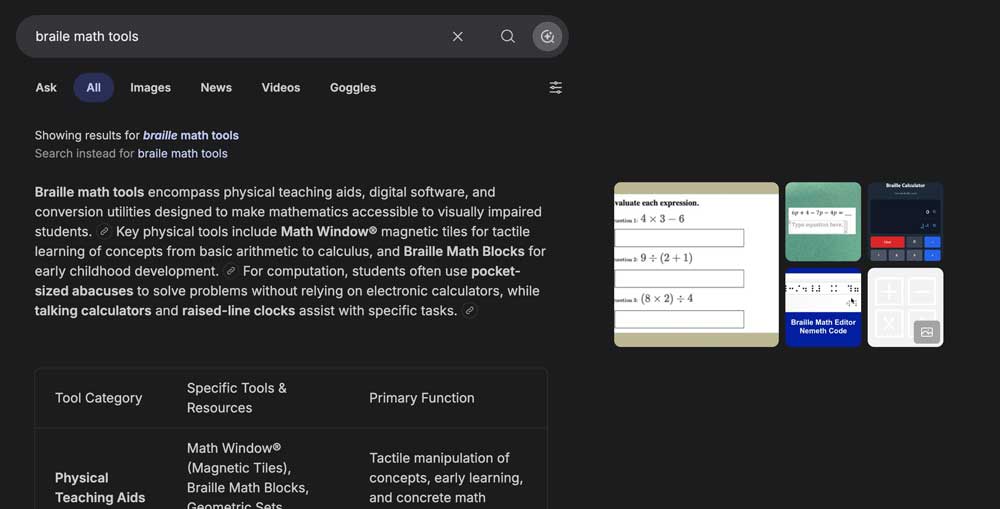
Content depth and specificity
AI overviews pull from sources with authoritative, specific content. Pages written to fully explain a product — not just list features — signal the depth both AI and traditional search reward.
WCAG accessibility + semantic structure
Accessible markup is readable markup. Proper alt text, semantic HTML, and logical structure make content easier for AI systems to parse, understand, and reference accurately.
Authority built over time
Inclusion in AI-generated overviews is not a launch metric — it is a signal of sustained relevance and trust. Two years of clean architecture and strong content produced this result.
A Little More About Me
I’ve been doing this long enough to know what I am good at, I’m honest enough to know what I don’t know, and I’m still curious enough to enjoy the difference.
I started in web development before WordPress was a serious platform, working in HTML, FLASH, ASP.NET and e-commerce at a time when building for the web meant figuring most of it out yourself. That foundation of curiosity and hard work stuck. Twenty years later I still approach problems the same way: understand the system before touching it, and build things that hold up over time.
Along the way I have worked on everything from custom WordPress builds and WooCommerce stores to membership platforms, internal tools, and full SaaS products built from scratch. The problems change. The approach does not.
I work best in environments where quality is valued, documentation is treated as part of the job, and developers are brought into decisions before commitments are made. I am thorough, direct, and most productive when I can go deep on a hard problem and get it right.